Laparoscopic cholecystectomy has been considered the "gold standard" for the surgical treatment of symptomatic gallstone disease because it numerous advantages. However, this surgical technique presents specific anesthetic challenges. The aim of study was to describe the anesthetic management of laparoscopic cholecystectomies at the Brazzaville University Teaching Hospital (BUTH). This was a retrospective, cross-sectional study conducted from January 1, 2023 to April 30, 2025, at BUTH. All patients aged 15 years and older who underwent laparoscopic cholecystectomy were included. The epidemiological, anesthetic, surgical variables and outcomes were analyzed using Excel 2016 software. Fifty-eight patients underwent laparoscopic cholecystectomy. The mean age was 34.1 ± 14.3 years (range: 15 – 72 years). The sex ratio was 0.3. Symptomatic gallstones (96.5%) were the main indication for surgery. Comorbidities were present in 63.8% of cases, including homozygous sickle cell disease in 72.9%. Symptomatic gallstone disease (96.5%) was the primary indication for surgery. Difficult intubation, as predicted by the Mallampati score, was reported in 8.6%. Patients were classified as ASA 2 (67.2%). An Apfel score ≥ 2 was reported in 45 patients (77.6%). Antibiotics were administered to 89.6% of patients and domined by cefuroxime. All patients underwent surgery under general anesthesia with orotracheal intubation. Capnography was monitored in five patients (8.6%). Hypotension (27.58%) and severe bradycardia (8.62%) were the observed anesthetic complications. Four patients (6.9%) required conversion to laparotomy. The mean duration of abdominal insufflation was 79.9 ± 47.0 minutes and the mean duration of anesthesia was 145.5 ± 53.0 minutes. Postoperative complications were present in four patients with sickle cell disease (6.9%): one bone vaso-occlusive crisis, two respiratory infections and one pneumothorax associated with subcutaneous emphysema, requiring admission to the intensive care unit with an unfavorable outcome. Conclusion: Anesthesia for laparoscopic cholecystectomy is feasible at the BUTH for symptomatic gallstones, even in patients with sickle cell disease. Improved intraoperative monitoring could reduce the risk of postoperative complications.
This is an Open Access article, distributed under the terms of the Creative Commons Attribution 4.0 International License (http://creativecommons.org/licenses/by/4.0/), which permits unrestricted use, distribution and reproduction in any medium or format, provided the original work is properly cited.
Since its introduction in 1987, laparoscopic cholecystectomy has been considered the "gold standard" for the surgical treatment of symptomatic gallstone disease
[1]
Ngo TT, Odasso C, De Wailly P, Roussel B, Doucet C, Carretier M, etal. Common bile duct stones: single-stage laparoscopic cholecystectomy and endoscopic sphincterotomy (56). JChirVisc 2010; 147(4), S1: 8.
. Compared to open surgery (laparotomy), it offers numerous advantages, namely significantly reduced postoperative pain, lower infection rates which are a particular concern in developing countries, shorter hospital stays and improved postoperative recovery
[3]
Wilkinson E, Aruparayil N, Gnanaraj J, Brown J and Jayne D. Barriers to training in laparoscopic surgery in low-and middle-income countries: a systematic review. TropDoct 2021; 51(3): 408-14.
Chao TE, Mandigo M, Opoku-Anane J and Maine R. Systematic review of laparoscopic surgery in low- and middle-income countries: benefits, challenges, and strategies. SurgEndosc 2016; 30: 1-10.
. These benefits are particularly significant for developing countries, where hospital beds are scarce, health insurance is virtually non-existent, and the financial burden of care falls on families.
However, this surgical technique presents specific anesthetic challenges associated with carbon dioxide pneumoperitoneum and the operative position, both of which cause significant hemodynamic and respiratory changes. The primary challenges for the anesthesiologist-intensivist (AI) are to optimize ventilatory and hemodynamic functions and to account for comorbidities in order to minimize the impact of pneumoperitoneum on patients undergoing this type of surgery. These factors make general anesthesia (GA) with controlled ventilation and appropriate monitoring essential to ensure patient safety during the perioperative period
[5]
Duale C, Bolandard F, Duband P, Mission JP and Schoeffler P. Physiopathological consequences of laparoscopic surgery. In: Annal.chir. Elsevier Masson, 2001. p. 508-514.
Gropper MA, Eriksson LI, Fleisher LA, Cohen NH, Leslie K and Johnson-Akeju O.Miller's anesthesia, 2-volume set E-book. 10thEd. Elsevier Health Sciences; 2024.
[5, 6]
. In developing countries in general, and in sub-Saharan Africa in particular, laparoscopic surgery presents an additional challenge due to technical constraints and shortages of human and material resources. Despite the gradual expansion of gastrointestinal laparoscopic surgery across several African countries, studies regarding anesthetic management remain scarce and often lack detail
[7]
Nga Nomo S, Iroume C, Kuitchet A, Djomo Tamchom D, Chewa G, etal. Anesthesia for Laparoscopic Cholecystectomy in Sickle Cell Patients: Experience of a Hospital Implementing Laparoscopic Digestive Surgery in Central Africa. IntJClinAnesthesiol 2022; 10(2): 1120.
[8]
Note Madzele M, Ele N, Motoula N, Massamba-Miabaou D, Nzaka MCD, Mitsomoy M, etal. Laparoscopic Cholecystectomy In Brazzaville: Experience Of The First 5 Years. J.Afr.Chir.2014; 3(1): 2-6.
[7, 8]
. In the Republic of the Congo, the first laparoscopic cholecystectomy was performed in February 2009 at Brazzaville University Teaching Hospital (BUTH), leading to improvements in the quality of surgical care since then
[8]
Note Madzele M, Ele N, Motoula N, Massamba-Miabaou D, Nzaka MCD, Mitsomoy M, etal. Laparoscopic Cholecystectomy In Brazzaville: Experience Of The First 5 Years. J.Afr.Chir.2014; 3(1): 2-6.
[9]
Elion Ossibi PE, Massamba Miabaou D, Note-Madzele MEJ, Bhodeho Monwongui M, Tsouassa Wa Ngono GB, Service Yanguedet M, etal. Panoramic Study of Laparoscopic Digestive Surgery at Brazzaville University Hospital. IntJgastroenterol. 2025; 9(1): 45-51.
. However, data regarding the anesthetic management of this procedure remain unavailable. We therefore conducted this study to evaluate local anesthetic practice and contribute to optimizing patient care. The aim of our study was to describe the anesthetic management of laparoscopic cholecystectomies in the BUTH operating room.
2. Patients and Methods
2.1. Study Design and Setting
This study was designed and planned by the research team of the anesthesia department at the BUTH, and approval from the ethics committee was not required. This was a descriptive, observational, retrospective and cross-sectional study conducted in the operating room of BUTH over a 28-month period, from January 1, 2023, to April 30, 2025.
2.2. Study Population and Selection Criteria
Our study population consisted of all patients who underwent laparoscopic surgery during the study period. We included the written medical records of all patients aged 15 years or older regardless of gender who underwent a cholecystectomy. Patients with incomplete or unusable records were excluded from the study.
2.3. Data Collection and Variables
Data were collected from operating room admission registers, anesthesia records, written medical files from the digestive surgery and polyvalent intensive care unit (ICU) departments, and patient prescription and monitoring charts. A standardized data collection form was designed.
2.4. Study Variables and Statistical Analysis
The following variables were analyzed: epidemiological (frequency, age, sex, comorbidities, drug allergies), anesthetic (Mallampati score, ASA classification, preoperative preparation, anesthetic techniques and agents, monitoring, intraoperative complications, duration of anesthesia), surgical (indications, conversion, insufflation time, duration of surgery) and outcomes (complications, mortality). Microsoft Excel 2016 software was used to create the database and generate the graphs. Quantitative variables were expressed as mean ± standard deviation, and qualitative variables were expressed as counts and percentages (%).
2.5. Anesthetic Assessment and Management
A pre-anesthetic consultation was mandatory, performed by an anesthesiologist, and preoperative assessment was conducted on a case-by-case basis depending on the patient's clinical status. GA with tracheal intubation and neuromuscular blockade was the standard practice. Antibiotic therapy or prophylaxis (using cefuroxime or, alternatively, amoxicillin/clavulanic acid) was administered based on the type of surgery, in accordance with the Altemeier classification. Intraoperative monitoring included non-invasive blood pressure (NIBP) measurement, peripheral oxygen saturation (POS), electrocardiography, and alveolar gas analysis. A neuromuscular transmission monitor was not available. Volume-controlled ventilation (VCV) was the standard: a tidal volume of 6-8 ml/kg of predicted body weight, positive end-expiratory pressure (PEEP) of 3-6 cm H₂O, and a plateau pressure not exceeding 30 cm H₂O. Intra-abdominal pressure was kept below 15 mmHg. Prophylaxis against postoperative nausea and vomiting (PONV) using dexamethasone and/or ondansetron was not routinely administered. Analgesia was multimodal (paracetamol, nefopam, and ketoprofen, with or without tramadol or morphine if the numerical pain score exceeded 3/10 despite the aforementioned analgesics). Infiltration of trocar sites with ropivacaine was not performed due to its scarcity in our country's pharmacies.
3. Results
3.1. Frequency
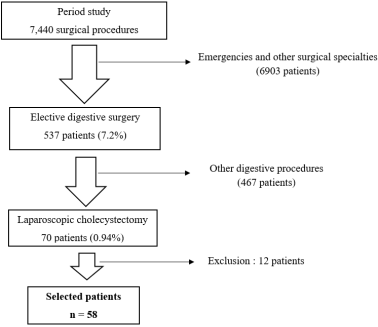
During the study period, 7,440 surgical procedures across all specialties were performed, comprising both elective and emergency surgeries. In digestive surgery, 537 patients (7.2%) underwent elective surgery. Of these, 70 underwent laparoscopic cholecystectomy, representing 13% of digestive surgery activity and 0.9% of all surgeries combined. After applying the selection criteria, 58 patients were included in our study (Figure 1).
The mean age was 34.1 ± 14.3 years, with a range from 15 to 72 years. The 20-39 age group was the most represented (44.8%). There was a female predominance (74.1% of cases), resulting in a sex ratio of 0.3. In 63.8% of cases, patients presented with at least one comorbidity; homozygous SS sickle cell disease (46.5%) and arterial hypertension (10.3%) were the most common. A surgical history was noted in 11 patients (18.9%). Symptomatic gallstone disease (96.5%) was the primary indication for surgery. Table 1 illustrates the distribution of patients according to epidemiological characteristics.
Table 1. Distribution of population according to epidemiological characteristics.
Effective (n=58)
Percentage (%)
Age groups (years)
< 20
8
13.8%
20 – 39
26
44.8%
40 – 59
22
37.9%
≥ 60
2
3.5%
Sex
Male
15
25.9%
Female
43
74.1%
Comorbidities
No comorbidity
21
36.2%
Sickle cell disease
27
46.6%
Arterial hypertension
6
14.5%
Drug allergy
5
8.6%
Diabetes
3
5.2%
Asthma
2
3.5%
Neuralgia
1
1.7%
Psychosis
1
1.7%
Surgical history
Yes
11
18.9%
Blood transfusion history
Yes
30
51.7%
3.3. Anesthetics, Surgical Characteristics and Operative Complications
In our series, five patients (8.6%) had a Mallampati score of 3 or 4, predictive of difficult tracheal intubation. ASA 2 and 1 classes predominated, accounting for 67.2% and 29.3% of cases, respectively. An Apfel score ≥ 2 was reported in 45 patients (77.6%). Antibiotic prophylaxis or therapy was administered to 52 patients (89.6%), with cefuroxime (53.5%) being the most frequently used antibiotic. In our study, 17.2% of patients required preoperative preparation: optimization of antihypertensive treatment in four patients, vitamin K supplementation in three patients, blood transfusion in two patients, and a miscarriage prevention protocol for one patient with eight (8) weeks of amenorrhea. Table 2 presents the distribution of patients according to anesthetic characteristics. All patients underwent surgery under GA with orotracheal intubation. Capnography was monitored in only five patients (8.6%). The following anesthetic agents were used: propofol (100%), fentanyl (100%), suxamethonium (3.4%), rocuronium (98.3%), atracurium (1.7%), halothane (68.9%), and isoflurane (27.6%). Pharmacological reversal of neuromuscular blockade using neostigmine was administered to two patients (3.4%). Arterial hypotension (27.6%) and severe bradycardia (8.6%) were the anesthetic intraoperative complications observed. Table 3 shows the distribution of our population according to anesthetic complications and their management. Four patients (6.9%) required conversion to laparotomy. Postoperatively, all patients were extubated on the operating table. The mean duration of abdominal insufflation (10 and 15 mmHg) was 79.9 ± 47.0 minutes; the mean duration of surgery was 101.4 ± 48.8 minutes, and that of anesthesia was 145.5 ± 53.0 minutes. Postoperative complications occurred in four patients (6.9%), all of whom were homozygous for sickle cell disease: one case of vaso-occlusive crisis (VOC) involving the bone, two cases of respiratory infections that resolved satisfactorily, and one case of respiratory distress due to pneumothorax associated with subcutaneous emphysema, which required admission to the polyvalent ICU and had an unfavorable outcome (death).
Table 2. Distribution of population according to anesthetic characteristics.
Effective (n=58)
Percentage (%)
Mallampati score
≤ 2
53
91.4%
≥ 3
5
8.6%
ASA classes
1
17
29.3%
2
39
67.2%
3
2
3.5%
Apfel score
< 2
13
22.4%
≥ 2
45
77.6%
Preoperative preparation
Yes
11
18.9%
Antibiotics
No
6
10.3%
Cefuroxime
31
53.5%
Amoxicillin/clavulanic acid
18
31%
Metronidazole
2
3.5%
Ceftriaxone
2
3.5%
Table 3. Distribution of population according to anesthetic complications and management.
Effective (n=58)
Percentage (%)
Intraoperative anesthetic complications
Arterial hypotension
18
31%
Severe bradycardia
5
8.6%
Hypercapnia
2
3.5%
Management
Ephedrine
17
29.3%
Atropine
5
8.6%
Mechanical hyper ventilation
1
1.7%
4. Discussion
4.1. Limitation of Study
Certain limitations must be considered for a better interpretation of our results. During our study, the following limitations were encountered: first, the retrospective nature of the study made it impossible to identify all patients who underwent laparoscopic cholecystectomy, due to poor record-keeping and/or a lack of usable data. Furthermore, the single-center design and the short duration of the study prevented us from obtaining a sample size large enough to extrapolate the results to a national level. However, this study provides a foundation for future research ideally multicenter studies with larger sample sizes. Our study was conducted to report on local anesthesia practices for laparoscopic cholecystectomy at BUTH, a public healthcare facility in a resource-limited setting.
4.2. Frequency
During the study period, laparoscopic cholecystectomy accounted for 0.9% of surgical procedures across all specialties. This finding aligns with data from African literature
[7]
Nga Nomo S, Iroume C, Kuitchet A, Djomo Tamchom D, Chewa G, etal. Anesthesia for Laparoscopic Cholecystectomy in Sickle Cell Patients: Experience of a Hospital Implementing Laparoscopic Digestive Surgery in Central Africa. IntJClinAnesthesiol 2022; 10(2): 1120.
[10]
Yankunze Y, Mwachiro MM, Lando JO, Bachheta N, Mangaoang D, Bekele A, etal. Laparoscopy experience in East, Central, and Southern Africa: insights from operative case volume analysis. SurgEndosc 2024; 38: 4415-21.
Ndong A, Racine IB, Diao ML, Tendeng JN, Diallo A, Thiam O, etal. Audit Of Laparoscopic Surgery Activities At The Saint-Louis Regional Hospital Center (Senegal): Prospective Study Over 3 Years. JAfrChirDigest2022; 22(2): 3763-7.
[12]
Didier LJ, Adama S, Abdoulaye MB, Ide K, Hama Y, Chaibou MS, etal. The practice of laparoscopy in a general surgery department of Niger: the case of the Niamey National Hospital. HealthSci.Dis2018; 19(1), Suppl 1: 58-62.
. The low frequency observed in our series could be attributed to prolonged strikes at the BUTH, shortages of supplies, and poor equipment maintenance. The high overall cost of care makes this technique inaccessible to some patients.
4.3. Epidemiological Characteristics
The mean age of our patients was 34.1 ± 14.3 years, with a female predominance of 74.1%. This young, predominantly female profile is similar to that found in other African series on laparoscopic cholecystectomy, which also report a significant female predominance
[8]
Note Madzele M, Ele N, Motoula N, Massamba-Miabaou D, Nzaka MCD, Mitsomoy M, etal. Laparoscopic Cholecystectomy In Brazzaville: Experience Of The First 5 Years. J.Afr.Chir.2014; 3(1): 2-6.
[13]
Kaimba BM, Mahamat Y and Akouya SD. Laparoscopic cholecystectomy for acute calculous cholecystitis: a report of 22 cases collected at N’Djamena Renaissance Hospital. PAMJ 2015; 21(311): 1-4.
Mosolo A, Mbombo W, Tshilanda M, Mbuyi F, Kambala P, Sangana G, etal. Experience of anesthesia in laparoscopic surgery at Secondary Level Hospital Located in Suburban Environment. OJAnes 2025; 15: 31-47.
Assohoun KT, Dah GF, Koffi GM, Andjemian N and Sylla A. Laparoscopic Cholecystectomy: Our Experience at the Angre University Hospital. SASJSurg2025; 11(7): 823-8.
. This consistent female predominance in African series reflects the epidemiology of gallstones, which are more common in women. In 63.8% of cases, patients presented with at least one comorbidity, with a high proportion of homozygous sickle cell disease. Our results corroborate those of several African studies in which sickle cell disease remains the primary comorbidity identified
[8]
Note Madzele M, Ele N, Motoula N, Massamba-Miabaou D, Nzaka MCD, Mitsomoy M, etal. Laparoscopic Cholecystectomy In Brazzaville: Experience Of The First 5 Years. J.Afr.Chir.2014; 3(1): 2-6.
[14]
Mosolo A, Mbombo W, Tshilanda M, Mbuyi F, Kambala P, Sangana G, etal. Experience of anesthesia in laparoscopic surgery at Secondary Level Hospital Located in Suburban Environment. OJAnes 2025; 15: 31-47.
Sangare D, Camara M, Sanogo ZZ, Koumare S, Koïta AK, Soumare L,etal. Laparoscopic Cholecystectomy in Mali. State of the Art in 2012: 340 Cases. E-MemoirsoftheNationalAcademyofSurgery2015; 14(3): 072-6.
Mukakala AK, Nafatalewa DK, Kalau WA, Mwembo DM, Sabgoze S, Fefe RI, etal. Laparoscopic cholecystectomy for gallstone disease: Feasibility and results in Lubumbashi. RAMS 2023; 99-101.
[18]
Ka O, Diagne I, Ba PA, Cisse M, Ka I, Dieng M, et al. Laparoscopic prophylactic cholecystectomy for gallstones in children with sickle cell disease. Jcoelio-chir. 2010; 76: 51-4.
[8, 14, 16-18]
. Sickle cell disease is the most common hemoglobinopathy worldwide and appears to be a more frequent comorbidity in Africa than in Western countries. It is associated with significant anesthetic implications, namely the prevention of hypoxia, hypovolemia, VOC, hypothermia, and anemia
[19]
Adouni H, Jouini R, Habibi A, Galacteros F and Plaud B. Anesthesia and Hemoglobinopathies. The 2012 Congress. French Society of Anesthesia and Intensive Care (SFAR).
[19]
.
4.4. Anesthetic Characteristics
In our series, five patients (8.6%) had a Mallampati score of 3, which is predictive of difficult tracheal intubation. This rate is higher than that reported by Mosolo et al. in the Democratic Republic of the Congo (DRC), where only 2.4% of patients had a Mallampati score of 3
[14]
Mosolo A, Mbombo W, Tshilanda M, Mbuyi F, Kambala P, Sangana G, etal. Experience of anesthesia in laparoscopic surgery at Secondary Level Hospital Located in Suburban Environment. OJAnes 2025; 15: 31-47.
The presence of patients with a Mallampati score of 3 highlights the importance of a rigorous preoperative assessment of the upper airway, even in ASA 1 or 2 patients, in order to plan for optimal airway management. Laparoscopic abdominal surgery necessitates securing the airway due to the risk of aspiration associated with pneumoperitoneum and the head-up (reverse Trendelenburg) position; this justifies the routine use of tracheal intubation in our series
[5]
Duale C, Bolandard F, Duband P, Mission JP and Schoeffler P. Physiopathological consequences of laparoscopic surgery. In: Annal.chir. Elsevier Masson, 2001. p. 508-514.
ASA 2 and 1 classes predominated, accounting for 67.2% and 29.3% of cases, respectively. Similar trends were reported by Mosolo et al. and Mukakala et al. in the DRC
[14]
Mosolo A, Mbombo W, Tshilanda M, Mbuyi F, Kambala P, Sangana G, etal. Experience of anesthesia in laparoscopic surgery at Secondary Level Hospital Located in Suburban Environment. OJAnes 2025; 15: 31-47.
Mukakala AK, Nafatalewa DK, Kalau WA, Mwembo DM, Sabgoze S, Fefe RI, etal. Laparoscopic cholecystectomy for gallstone disease: Feasibility and results in Lubumbashi. RAMS 2023; 99-101.
[14, 17]
. Likewise, a predominance of ASA class 2 patients was observed by Nga Nomo et al. (93.1%) in Cameroon and Leye et al. (62.5%) in Senegal
[7]
Nga Nomo S, Iroume C, Kuitchet A, Djomo Tamchom D, Chewa G, etal. Anesthesia for Laparoscopic Cholecystectomy in Sickle Cell Patients: Experience of a Hospital Implementing Laparoscopic Digestive Surgery in Central Africa. IntJClinAnesthesiol 2022; 10(2): 1120.
[20]
Leye PA, Fall ML, Bah MD, Ndiaye PI, Hounkpevi SFC, Beye MD, etal. Perioperative management of homozygous sickle cell patient for a laparoscopic cholecystectomy. Rev.Afr.Anesth.Med.Urg. 2014; 19(2): 27-30. Available online at
. However, in Mali, Sangare et al. noted that 74.4% of patients were classified as ASA 1 in their study assessing the status of laparoscopic cholecystectomy in Bamako
[16]
Sangare D, Camara M, Sanogo ZZ, Koumare S, Koïta AK, Soumare L,etal. Laparoscopic Cholecystectomy in Mali. State of the Art in 2012: 340 Cases. E-MemoirsoftheNationalAcademyofSurgery2015; 14(3): 072-6.
. The high rate of ASA 2 patients in our series may be explained by a significant proportion of comorbidities (67.24%), primarily sickle cell disease and arterial hypertension. In our series, 89.6% of patients received antibiotic prophylaxis, predominantly using cefuroxime. Our results align with international and African guidelines recommending antibiotic prophylaxis for laparoscopic cholecystectomy
[21]
Garnier M, Gauzit R and Leone M. French Expert Group on Surgical Procedural antibioprophylaxis on behalf of SFAR and SPILF. Guidelines on Antibiotic Prophylaxis in Surgery 2024. AnaesthCritCarePainMed2026, 101749.
. The predominance of cefuroxime is explained by its availability, a spectrum of activity suited to common gastrointestinal pathogens, and an affordable cost, making it a frequently used antibiotic in developing countries. Several African studies support this finding, as second-generation cephalosporins are widely used for surgical prophylaxis. All patients underwent GA with orotracheal intubation. Our results corroborate findings in the literature
[7]
Nga Nomo S, Iroume C, Kuitchet A, Djomo Tamchom D, Chewa G, etal. Anesthesia for Laparoscopic Cholecystectomy in Sickle Cell Patients: Experience of a Hospital Implementing Laparoscopic Digestive Surgery in Central Africa. IntJClinAnesthesiol 2022; 10(2): 1120.
[20]
Leye PA, Fall ML, Bah MD, Ndiaye PI, Hounkpevi SFC, Beye MD, etal. Perioperative management of homozygous sickle cell patient for a laparoscopic cholecystectomy. Rev.Afr.Anesth.Med.Urg. 2014; 19(2): 27-30. Available online at
. In the DRC, Mosolo et al. reported a 3.3% rate of neuraxial anesthesia (such as spinal anesthesia) combined with GA, and a 1.1% rate of spinal anesthesia alone
[14]
Mosolo A, Mbombo W, Tshilanda M, Mbuyi F, Kambala P, Sangana G, etal. Experience of anesthesia in laparoscopic surgery at Secondary Level Hospital Located in Suburban Environment. OJAnes 2025; 15: 31-47.
. While the use of neuraxial anesthesia is feasible, it is associated with patient discomfort (shoulder pain) and a higher incidence of hemodynamic instability, often necessitating conversion to GA. Thus, GA remains the standard of care for laparoscopic cholecystectomy, as it allows for controlled ventilation, effective airway protection, and better tolerance of the respiratory changes induced by pneumoperitoneum
[5]
Duale C, Bolandard F, Duband P, Mission JP and Schoeffler P. Physiopathological consequences of laparoscopic surgery. In: Annal.chir. Elsevier Masson, 2001. p. 508-514.
In our study, capnography could be used for only 8.6% of patients, reflecting a lack of adequate technical facilities and equipment. Many developing countries face a similar situation, where ventilatory monitoring still relies largely on clinical parameters, pulse oximetry (POS), and hemodynamic assessment. Despite this limitation, adjustments to mechanical ventilation and clinical monitoring allowed for satisfactory anesthetic management. However, the routine use of capnography would improve the early detection of hypercapnia, thereby enhancing patient safety
[5]
Duale C, Bolandard F, Duband P, Mission JP and Schoeffler P. Physiopathological consequences of laparoscopic surgery. In: Annal.chir. Elsevier Masson, 2001. p. 508-514.
. Indeed, systemic carbon dioxide absorption frequently causes intraoperative hypercapnia, leading to cardiovascular effects such as vasodilation and cardiac arrhythmias
[5]
Duale C, Bolandard F, Duband P, Mission JP and Schoeffler P. Physiopathological consequences of laparoscopic surgery. In: Annal.chir. Elsevier Masson, 2001. p. 508-514.
. The rise in carbon dioxide levels is a constant and expected phenomenon that necessitates ventilatory adjustments and advanced monitoring.
4.5. Operative Complications
The incidence of arterial hypotension observed in our study (27.6%) is higher than that reported in some other studies
[14]
Mosolo A, Mbombo W, Tshilanda M, Mbuyi F, Kambala P, Sangana G, etal. Experience of anesthesia in laparoscopic surgery at Secondary Level Hospital Located in Suburban Environment. OJAnes 2025; 15: 31-47.
. Our results are consistent with data from the literature. Several studies have shown that carbon dioxide pneumoperitoneum leads to reduced venous return and consequently reduced cardiac output as well as increased systemic vascular resistance and fluctuations in arterial blood pressure, regardless of ASA physical status.
Five patients (8.6%) required conversion to laparotomy. Comparable rates, ranging from 3.3% to 10.3%, have been reported by several authors
[7]
Nga Nomo S, Iroume C, Kuitchet A, Djomo Tamchom D, Chewa G, etal. Anesthesia for Laparoscopic Cholecystectomy in Sickle Cell Patients: Experience of a Hospital Implementing Laparoscopic Digestive Surgery in Central Africa. IntJClinAnesthesiol 2022; 10(2): 1120.
[17]
Mukakala AK, Nafatalewa DK, Kalau WA, Mwembo DM, Sabgoze S, Fefe RI, etal. Laparoscopic cholecystectomy for gallstone disease: Feasibility and results in Lubumbashi. RAMS 2023; 99-101.
[18]
Ka O, Diagne I, Ba PA, Cisse M, Ka I, Dieng M, et al. Laparoscopic prophylactic cholecystectomy for gallstones in children with sickle cell disease. Jcoelio-chir. 2010; 76: 51-4.
[20]
Leye PA, Fall ML, Bah MD, Ndiaye PI, Hounkpevi SFC, Beye MD, etal. Perioperative management of homozygous sickle cell patient for a laparoscopic cholecystectomy. Rev.Afr.Anesth.Med.Urg. 2014; 19(2): 27-30. Available online at
N'tcha, HN, Attolou S, Gandji W, Souaibou YI, Ewassadja, V, Dugue L, etal. Risk factors for conversion of laparoscopic cholecystectomy to open Surgery. JAfrChirDigest2018; 18(2): 2405-11.
[7, 17, 18, 20, 22, 23]
. In our series, conversion to laparotomy was necessitated by the presence of multiple adhesions, which made visualization and access to the operative site difficult via the laparoscopic approach. In the literature, this probability of conversion to laparotomy ranged from 5% to 20%
[24]
Borie F, Millat B. Laparoscopic cholecystectomy and common bile duct exploration: laparoscopic treatment of common bile duct stones. Med Surg Encycl, Surgical techniques – Digestive system. 2003; 40-950.
[24]
.
5. Conclusion
Anesthesia for laparoscopic cholecystectomy is feasible at BUTH for symptomatic gallstone disease, even in patients with sickle cell disease. GA with tracheal intubation remains the gold standard technique. However, the limited availability of capnography represents a constraint, though it reflects the reality of most resource-limited settings. Thus, improving technical facilities - particularly intraoperative monitoring - could reduce the risk of the intraoperative and postoperative complications observed in our series.
Abbreviations
AI
Anesthesiologist-intensivist
ASA
American Society of Anesthesiologists
BUTH
Brazzaville University Teaching Hospital
DRC
Democratic Republic of the Congo
GA
General Anesthesia
ICU
Intensive Care Unit
NIBP
Non-invasive Blood Pressure
PEEP
Positive End-expiratory Pressure
PONV
Postoperative Nausea and Vomiting
POS
Peripheral Oxygen Saturation
VCV
Volume-controlled Ventilation
VOC
Vaso-occlusive Crisis
Acknowledgments
The authors of this manuscript wish to express their sincere gratitude to the entire medical and paramedical staff of the operating room, digestive surgery department, and polyvalent intensive care unit at the Brazzaville University Teaching Hospital for their dedication and commitment to the effective care of patients. Their personal commitment to improving perioperative patient care was a major asset in the development and completion of this manuscript.
Wilkinson E, Aruparayil N, Gnanaraj J, Brown J and Jayne D. Barriers to training in laparoscopic surgery in low-and middle-income countries: a systematic review. TropDoct 2021; 51(3): 408-14.
Chao TE, Mandigo M, Opoku-Anane J and Maine R. Systematic review of laparoscopic surgery in low- and middle-income countries: benefits, challenges, and strategies. SurgEndosc 2016; 30: 1-10.
Gropper MA, Eriksson LI, Fleisher LA, Cohen NH, Leslie K and Johnson-Akeju O.Miller's anesthesia, 2-volume set E-book. 10thEd. Elsevier Health Sciences; 2024.
[7]
Nga Nomo S, Iroume C, Kuitchet A, Djomo Tamchom D, Chewa G, etal. Anesthesia for Laparoscopic Cholecystectomy in Sickle Cell Patients: Experience of a Hospital Implementing Laparoscopic Digestive Surgery in Central Africa. IntJClinAnesthesiol 2022; 10(2): 1120.
[8]
Note Madzele M, Ele N, Motoula N, Massamba-Miabaou D, Nzaka MCD, Mitsomoy M, etal. Laparoscopic Cholecystectomy In Brazzaville: Experience Of The First 5 Years. J.Afr.Chir.2014; 3(1): 2-6.
[9]
Elion Ossibi PE, Massamba Miabaou D, Note-Madzele MEJ, Bhodeho Monwongui M, Tsouassa Wa Ngono GB, Service Yanguedet M, etal. Panoramic Study of Laparoscopic Digestive Surgery at Brazzaville University Hospital. IntJgastroenterol. 2025; 9(1): 45-51.
Yankunze Y, Mwachiro MM, Lando JO, Bachheta N, Mangaoang D, Bekele A, etal. Laparoscopy experience in East, Central, and Southern Africa: insights from operative case volume analysis. SurgEndosc 2024; 38: 4415-21.
Ndong A, Racine IB, Diao ML, Tendeng JN, Diallo A, Thiam O, etal. Audit Of Laparoscopic Surgery Activities At The Saint-Louis Regional Hospital Center (Senegal): Prospective Study Over 3 Years. JAfrChirDigest2022; 22(2): 3763-7.
[12]
Didier LJ, Adama S, Abdoulaye MB, Ide K, Hama Y, Chaibou MS, etal. The practice of laparoscopy in a general surgery department of Niger: the case of the Niamey National Hospital. HealthSci.Dis2018; 19(1), Suppl 1: 58-62.
Kaimba BM, Mahamat Y and Akouya SD. Laparoscopic cholecystectomy for acute calculous cholecystitis: a report of 22 cases collected at N’Djamena Renaissance Hospital. PAMJ 2015; 21(311): 1-4.
Mosolo A, Mbombo W, Tshilanda M, Mbuyi F, Kambala P, Sangana G, etal. Experience of anesthesia in laparoscopic surgery at Secondary Level Hospital Located in Suburban Environment. OJAnes 2025; 15: 31-47.
Assohoun KT, Dah GF, Koffi GM, Andjemian N and Sylla A. Laparoscopic Cholecystectomy: Our Experience at the Angre University Hospital. SASJSurg2025; 11(7): 823-8.
Sangare D, Camara M, Sanogo ZZ, Koumare S, Koïta AK, Soumare L,etal. Laparoscopic Cholecystectomy in Mali. State of the Art in 2012: 340 Cases. E-MemoirsoftheNationalAcademyofSurgery2015; 14(3): 072-6.
Mukakala AK, Nafatalewa DK, Kalau WA, Mwembo DM, Sabgoze S, Fefe RI, etal. Laparoscopic cholecystectomy for gallstone disease: Feasibility and results in Lubumbashi. RAMS 2023; 99-101.
[18]
Ka O, Diagne I, Ba PA, Cisse M, Ka I, Dieng M, et al. Laparoscopic prophylactic cholecystectomy for gallstones in children with sickle cell disease. Jcoelio-chir. 2010; 76: 51-4.
[19]
Adouni H, Jouini R, Habibi A, Galacteros F and Plaud B. Anesthesia and Hemoglobinopathies. The 2012 Congress. French Society of Anesthesia and Intensive Care (SFAR).
[20]
Leye PA, Fall ML, Bah MD, Ndiaye PI, Hounkpevi SFC, Beye MD, etal. Perioperative management of homozygous sickle cell patient for a laparoscopic cholecystectomy. Rev.Afr.Anesth.Med.Urg. 2014; 19(2): 27-30. Available online at
Garnier M, Gauzit R and Leone M. French Expert Group on Surgical Procedural antibioprophylaxis on behalf of SFAR and SPILF. Guidelines on Antibiotic Prophylaxis in Surgery 2024. AnaesthCritCarePainMed2026, 101749.
N'tcha, HN, Attolou S, Gandji W, Souaibou YI, Ewassadja, V, Dugue L, etal. Risk factors for conversion of laparoscopic cholecystectomy to open Surgery. JAfrChirDigest2018; 18(2): 2405-11.
[24]
Borie F, Millat B. Laparoscopic cholecystectomy and common bile duct exploration: laparoscopic treatment of common bile duct stones. Med Surg Encycl, Surgical techniques – Digestive system. 2003; 40-950.
Mayick, M. E. M. C., Gilles, N. O., Pierlesky, E. O., Ghislaine, B., Aurole, B. N. M., et al. (2026). Anesthetic Management in Laparoscopic Surgery for Cholecystectomy at Brazzaville University Teaching Hospital, Republic of Congo. International Journal of Anesthesia and Clinical Medicine, 14(2), 154-161. https://doi.org/10.11648/j.ijacm.20261402.15
Mayick, M. E. M. C.; Gilles, N. O.; Pierlesky, E. O.; Ghislaine, B.; Aurole, B. N. M., et al. Anesthetic Management in Laparoscopic Surgery for Cholecystectomy at Brazzaville University Teaching Hospital, Republic of Congo. Int. J. Anesth. Clin. Med.2026, 14(2), 154-161. doi: 10.11648/j.ijacm.20261402.15
Mayick MEMC, Gilles NO, Pierlesky EO, Ghislaine B, Aurole BNM, et al. Anesthetic Management in Laparoscopic Surgery for Cholecystectomy at Brazzaville University Teaching Hospital, Republic of Congo. Int J Anesth Clin Med. 2026;14(2):154-161. doi: 10.11648/j.ijacm.20261402.15
@article{10.11648/j.ijacm.20261402.15,
  author = {Mpoy Emy Monkessa Christ Mayick and Niengo Outsouta Gilles and Elion Ossibi Pierlesky and Bayoundoula Ghislaine and Bokoba-nde Ngala Marina Aurole and Tiafumu Konde Arnaud Christ and Tsouassa Wa Ngono Bienvenu Giresse and Elombila Marie and Otiobanda Gilbert Fabrice},
  title = {Anesthetic Management in Laparoscopic Surgery for Cholecystectomy at Brazzaville University Teaching Hospital, Republic of Congo},
  journal = {International Journal of Anesthesia and Clinical Medicine},
  volume = {14},
  number = {2},
  pages = {154-161},
  doi = {10.11648/j.ijacm.20261402.15},
  url = {https://doi.org/10.11648/j.ijacm.20261402.15},
  eprint = {https://article.sciencepublishinggroup.com/pdf/10.11648.j.ijacm.20261402.15},
  abstract = {Laparoscopic cholecystectomy has been considered the "gold standard" for the surgical treatment of symptomatic gallstone disease because it numerous advantages. However, this surgical technique presents specific anesthetic challenges. The aim of study was to describe the anesthetic management of laparoscopic cholecystectomies at the Brazzaville University Teaching Hospital (BUTH). This was a retrospective, cross-sectional study conducted from January 1, 2023 to April 30, 2025, at BUTH. All patients aged 15 years and older who underwent laparoscopic cholecystectomy were included. The epidemiological, anesthetic, surgical variables and outcomes were analyzed using Excel 2016 software. Fifty-eight patients underwent laparoscopic cholecystectomy. The mean age was 34.1 ± 14.3 years (range: 15 – 72 years). The sex ratio was 0.3. Symptomatic gallstones (96.5%) were the main indication for surgery. Comorbidities were present in 63.8% of cases, including homozygous sickle cell disease in 72.9%. Symptomatic gallstone disease (96.5%) was the primary indication for surgery. Difficult intubation, as predicted by the Mallampati score, was reported in 8.6%. Patients were classified as ASA 2 (67.2%). An Apfel score ≥ 2 was reported in 45 patients (77.6%). Antibiotics were administered to 89.6% of patients and domined by cefuroxime. All patients underwent surgery under general anesthesia with orotracheal intubation. Capnography was monitored in five patients (8.6%). Hypotension (27.58%) and severe bradycardia (8.62%) were the observed anesthetic complications. Four patients (6.9%) required conversion to laparotomy. The mean duration of abdominal insufflation was 79.9 ± 47.0 minutes and the mean duration of anesthesia was 145.5 ± 53.0 minutes. Postoperative complications were present in four patients with sickle cell disease (6.9%): one bone vaso-occlusive crisis, two respiratory infections and one pneumothorax associated with subcutaneous emphysema, requiring admission to the intensive care unit with an unfavorable outcome. Conclusion: Anesthesia for laparoscopic cholecystectomy is feasible at the BUTH for symptomatic gallstones, even in patients with sickle cell disease. Improved intraoperative monitoring could reduce the risk of postoperative complications.},
 year = {2026}
}
TY  - JOUR
T1  - Anesthetic Management in Laparoscopic Surgery for Cholecystectomy at Brazzaville University Teaching Hospital, Republic of Congo
AU  - Mpoy Emy Monkessa Christ Mayick
AU  - Niengo Outsouta Gilles
AU  - Elion Ossibi Pierlesky
AU  - Bayoundoula Ghislaine
AU  - Bokoba-nde Ngala Marina Aurole
AU  - Tiafumu Konde Arnaud Christ
AU  - Tsouassa Wa Ngono Bienvenu Giresse
AU  - Elombila Marie
AU  - Otiobanda Gilbert Fabrice
Y1  - 2026/09/08
PY  - 2026
N1  - https://doi.org/10.11648/j.ijacm.20261402.15
DO  - 10.11648/j.ijacm.20261402.15
T2  - International Journal of Anesthesia and Clinical Medicine
JF  - International Journal of Anesthesia and Clinical Medicine
JO  - International Journal of Anesthesia and Clinical Medicine
SP  - 154
EP  - 161
PB  - Science Publishing Group
SN  - 2997-2698
UR  - https://doi.org/10.11648/j.ijacm.20261402.15
AB  - Laparoscopic cholecystectomy has been considered the "gold standard" for the surgical treatment of symptomatic gallstone disease because it numerous advantages. However, this surgical technique presents specific anesthetic challenges. The aim of study was to describe the anesthetic management of laparoscopic cholecystectomies at the Brazzaville University Teaching Hospital (BUTH). This was a retrospective, cross-sectional study conducted from January 1, 2023 to April 30, 2025, at BUTH. All patients aged 15 years and older who underwent laparoscopic cholecystectomy were included. The epidemiological, anesthetic, surgical variables and outcomes were analyzed using Excel 2016 software. Fifty-eight patients underwent laparoscopic cholecystectomy. The mean age was 34.1 ± 14.3 years (range: 15 – 72 years). The sex ratio was 0.3. Symptomatic gallstones (96.5%) were the main indication for surgery. Comorbidities were present in 63.8% of cases, including homozygous sickle cell disease in 72.9%. Symptomatic gallstone disease (96.5%) was the primary indication for surgery. Difficult intubation, as predicted by the Mallampati score, was reported in 8.6%. Patients were classified as ASA 2 (67.2%). An Apfel score ≥ 2 was reported in 45 patients (77.6%). Antibiotics were administered to 89.6% of patients and domined by cefuroxime. All patients underwent surgery under general anesthesia with orotracheal intubation. Capnography was monitored in five patients (8.6%). Hypotension (27.58%) and severe bradycardia (8.62%) were the observed anesthetic complications. Four patients (6.9%) required conversion to laparotomy. The mean duration of abdominal insufflation was 79.9 ± 47.0 minutes and the mean duration of anesthesia was 145.5 ± 53.0 minutes. Postoperative complications were present in four patients with sickle cell disease (6.9%): one bone vaso-occlusive crisis, two respiratory infections and one pneumothorax associated with subcutaneous emphysema, requiring admission to the intensive care unit with an unfavorable outcome. Conclusion: Anesthesia for laparoscopic cholecystectomy is feasible at the BUTH for symptomatic gallstones, even in patients with sickle cell disease. Improved intraoperative monitoring could reduce the risk of postoperative complications.
VL  - 14
IS  - 2
ER  -
Faculty of Heath Sciences, Marien Ngouabi University, Brazzaville, Republic of Congo;Anesthesia and Intensive Care Department, Brazzaville University Teaching Hospital, Brazzaville, Republic of Congo
Faculty of Heath Sciences, Marien Ngouabi University, Brazzaville, Republic of Congo;Anesthesia and Intensive Care Department, Brazzaville University Teaching Hospital, Brazzaville, Republic of Congo
Faculty of Heath Sciences, Marien Ngouabi University, Brazzaville, Republic of Congo;Digestive Surgery Department, Brazzaville University Teaching Hospital, Brazzaville, Republic of Congo
Bayoundoula Ghislaine
Anesthesia and Intensive Care Department, Brazzaville University Teaching Hospital, Brazzaville, Republic of Congo
Bokoba-nde Ngala Marina Aurole
Anesthesia and Intensive Care Department, Brazzaville University Teaching Hospital, Brazzaville, Republic of Congo
Tiafumu Konde Arnaud Christ
Faculty of Heath Sciences, Marien Ngouabi University, Brazzaville, Republic of Congo;Department of Emergencies, Brazzaville University Teaching Hospital, Brazzaville, Republic of Congo
Tsouassa Wa Ngono Bienvenu Giresse
Digestive Surgery Department, Brazzaville University Teaching Hospital, Brazzaville, Republic of Congo
Elombila Marie
Faculty of Heath Sciences, Marien Ngouabi University, Brazzaville, Republic of Congo;Anesthesia and Intensive Care Department, Brazzaville University Teaching Hospital, Brazzaville, Republic of Congo
Otiobanda Gilbert Fabrice
Faculty of Heath Sciences, Marien Ngouabi University, Brazzaville, Republic of Congo;Anesthesia and Intensive Care Department, Brazzaville University Teaching Hospital, Brazzaville, Republic of Congo
Mayick, M. E. M. C., Gilles, N. O., Pierlesky, E. O., Ghislaine, B., Aurole, B. N. M., et al. (2026). Anesthetic Management in Laparoscopic Surgery for Cholecystectomy at Brazzaville University Teaching Hospital, Republic of Congo. International Journal of Anesthesia and Clinical Medicine, 14(2), 154-161. https://doi.org/10.11648/j.ijacm.20261402.15
Mayick, M. E. M. C.; Gilles, N. O.; Pierlesky, E. O.; Ghislaine, B.; Aurole, B. N. M., et al. Anesthetic Management in Laparoscopic Surgery for Cholecystectomy at Brazzaville University Teaching Hospital, Republic of Congo. Int. J. Anesth. Clin. Med.2026, 14(2), 154-161. doi: 10.11648/j.ijacm.20261402.15
Mayick MEMC, Gilles NO, Pierlesky EO, Ghislaine B, Aurole BNM, et al. Anesthetic Management in Laparoscopic Surgery for Cholecystectomy at Brazzaville University Teaching Hospital, Republic of Congo. Int J Anesth Clin Med. 2026;14(2):154-161. doi: 10.11648/j.ijacm.20261402.15
@article{10.11648/j.ijacm.20261402.15,
  author = {Mpoy Emy Monkessa Christ Mayick and Niengo Outsouta Gilles and Elion Ossibi Pierlesky and Bayoundoula Ghislaine and Bokoba-nde Ngala Marina Aurole and Tiafumu Konde Arnaud Christ and Tsouassa Wa Ngono Bienvenu Giresse and Elombila Marie and Otiobanda Gilbert Fabrice},
  title = {Anesthetic Management in Laparoscopic Surgery for Cholecystectomy at Brazzaville University Teaching Hospital, Republic of Congo},
  journal = {International Journal of Anesthesia and Clinical Medicine},
  volume = {14},
  number = {2},
  pages = {154-161},
  doi = {10.11648/j.ijacm.20261402.15},
  url = {https://doi.org/10.11648/j.ijacm.20261402.15},
  eprint = {https://article.sciencepublishinggroup.com/pdf/10.11648.j.ijacm.20261402.15},
  abstract = {Laparoscopic cholecystectomy has been considered the "gold standard" for the surgical treatment of symptomatic gallstone disease because it numerous advantages. However, this surgical technique presents specific anesthetic challenges. The aim of study was to describe the anesthetic management of laparoscopic cholecystectomies at the Brazzaville University Teaching Hospital (BUTH). This was a retrospective, cross-sectional study conducted from January 1, 2023 to April 30, 2025, at BUTH. All patients aged 15 years and older who underwent laparoscopic cholecystectomy were included. The epidemiological, anesthetic, surgical variables and outcomes were analyzed using Excel 2016 software. Fifty-eight patients underwent laparoscopic cholecystectomy. The mean age was 34.1 ± 14.3 years (range: 15 – 72 years). The sex ratio was 0.3. Symptomatic gallstones (96.5%) were the main indication for surgery. Comorbidities were present in 63.8% of cases, including homozygous sickle cell disease in 72.9%. Symptomatic gallstone disease (96.5%) was the primary indication for surgery. Difficult intubation, as predicted by the Mallampati score, was reported in 8.6%. Patients were classified as ASA 2 (67.2%). An Apfel score ≥ 2 was reported in 45 patients (77.6%). Antibiotics were administered to 89.6% of patients and domined by cefuroxime. All patients underwent surgery under general anesthesia with orotracheal intubation. Capnography was monitored in five patients (8.6%). Hypotension (27.58%) and severe bradycardia (8.62%) were the observed anesthetic complications. Four patients (6.9%) required conversion to laparotomy. The mean duration of abdominal insufflation was 79.9 ± 47.0 minutes and the mean duration of anesthesia was 145.5 ± 53.0 minutes. Postoperative complications were present in four patients with sickle cell disease (6.9%): one bone vaso-occlusive crisis, two respiratory infections and one pneumothorax associated with subcutaneous emphysema, requiring admission to the intensive care unit with an unfavorable outcome. Conclusion: Anesthesia for laparoscopic cholecystectomy is feasible at the BUTH for symptomatic gallstones, even in patients with sickle cell disease. Improved intraoperative monitoring could reduce the risk of postoperative complications.},
 year = {2026}
}
TY  - JOUR
T1  - Anesthetic Management in Laparoscopic Surgery for Cholecystectomy at Brazzaville University Teaching Hospital, Republic of Congo
AU  - Mpoy Emy Monkessa Christ Mayick
AU  - Niengo Outsouta Gilles
AU  - Elion Ossibi Pierlesky
AU  - Bayoundoula Ghislaine
AU  - Bokoba-nde Ngala Marina Aurole
AU  - Tiafumu Konde Arnaud Christ
AU  - Tsouassa Wa Ngono Bienvenu Giresse
AU  - Elombila Marie
AU  - Otiobanda Gilbert Fabrice
Y1  - 2026/09/08
PY  - 2026
N1  - https://doi.org/10.11648/j.ijacm.20261402.15
DO  - 10.11648/j.ijacm.20261402.15
T2  - International Journal of Anesthesia and Clinical Medicine
JF  - International Journal of Anesthesia and Clinical Medicine
JO  - International Journal of Anesthesia and Clinical Medicine
SP  - 154
EP  - 161
PB  - Science Publishing Group
SN  - 2997-2698
UR  - https://doi.org/10.11648/j.ijacm.20261402.15
AB  - Laparoscopic cholecystectomy has been considered the "gold standard" for the surgical treatment of symptomatic gallstone disease because it numerous advantages. However, this surgical technique presents specific anesthetic challenges. The aim of study was to describe the anesthetic management of laparoscopic cholecystectomies at the Brazzaville University Teaching Hospital (BUTH). This was a retrospective, cross-sectional study conducted from January 1, 2023 to April 30, 2025, at BUTH. All patients aged 15 years and older who underwent laparoscopic cholecystectomy were included. The epidemiological, anesthetic, surgical variables and outcomes were analyzed using Excel 2016 software. Fifty-eight patients underwent laparoscopic cholecystectomy. The mean age was 34.1 ± 14.3 years (range: 15 – 72 years). The sex ratio was 0.3. Symptomatic gallstones (96.5%) were the main indication for surgery. Comorbidities were present in 63.8% of cases, including homozygous sickle cell disease in 72.9%. Symptomatic gallstone disease (96.5%) was the primary indication for surgery. Difficult intubation, as predicted by the Mallampati score, was reported in 8.6%. Patients were classified as ASA 2 (67.2%). An Apfel score ≥ 2 was reported in 45 patients (77.6%). Antibiotics were administered to 89.6% of patients and domined by cefuroxime. All patients underwent surgery under general anesthesia with orotracheal intubation. Capnography was monitored in five patients (8.6%). Hypotension (27.58%) and severe bradycardia (8.62%) were the observed anesthetic complications. Four patients (6.9%) required conversion to laparotomy. The mean duration of abdominal insufflation was 79.9 ± 47.0 minutes and the mean duration of anesthesia was 145.5 ± 53.0 minutes. Postoperative complications were present in four patients with sickle cell disease (6.9%): one bone vaso-occlusive crisis, two respiratory infections and one pneumothorax associated with subcutaneous emphysema, requiring admission to the intensive care unit with an unfavorable outcome. Conclusion: Anesthesia for laparoscopic cholecystectomy is feasible at the BUTH for symptomatic gallstones, even in patients with sickle cell disease. Improved intraoperative monitoring could reduce the risk of postoperative complications.
VL  - 14
IS  - 2
ER  -





 Share This Article
 Twitter
 Linked In
 Facebook
 Copy
Copy Download